On-Site Acoustic Testing provides independent field measurement, verification, and troubleshooting for acoustics, noise, vibration, RF shielding, secure facilities, thermal conditions, and related environmental parameters.
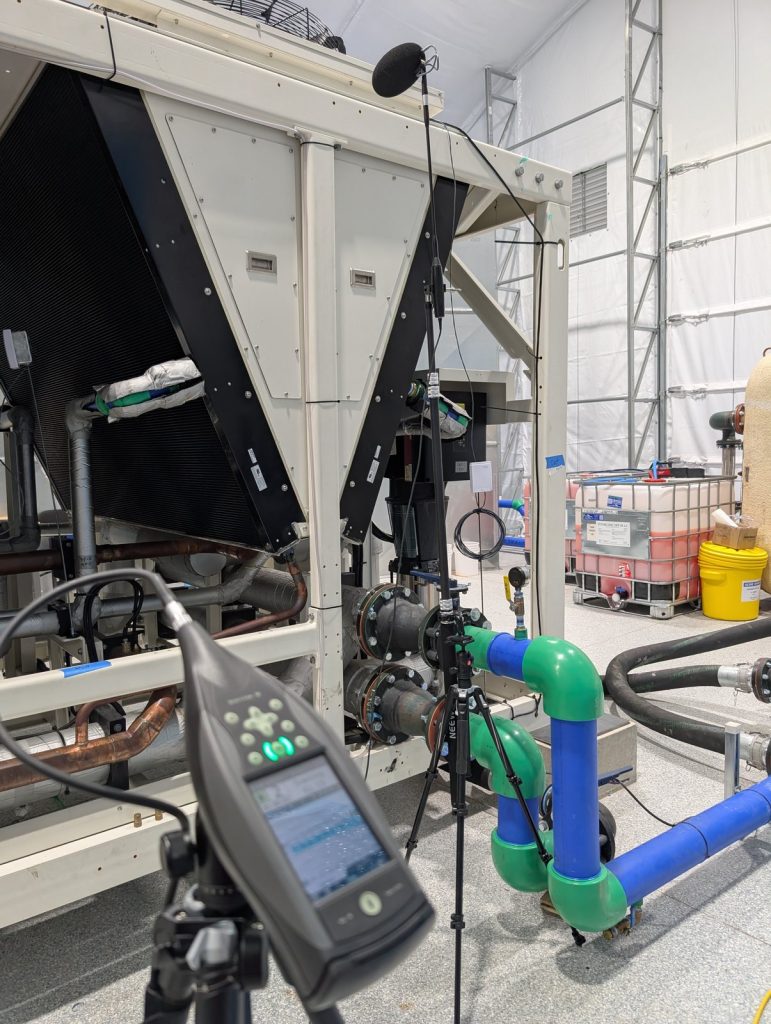
OSAT supports data center, HVAC, generator, pump, fan, cooling-system, and other mechanical investigations involving noise, vibration, source localization, commissioning support, and FLIR thermal imaging.
OSAT performs field work throughout the United States and internationally. Testing programs are developed around the applicable project specification, standard, acceptance criterion, or technical question.
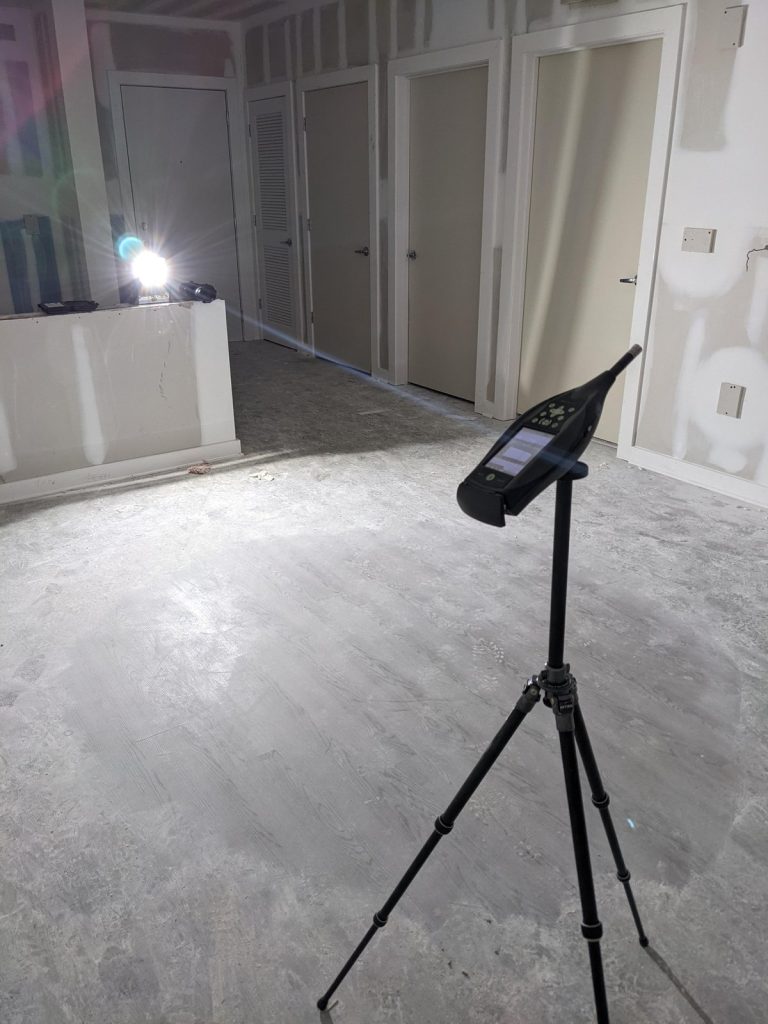
Field testing of installed building assemblies for airborne sound isolation, impact sound isolation, exterior façade performance and reverberation.
On-Site Acoustic Testing provides building acoustics field testing throughout the United States and internationally for government and military facilities, architects, engineers, contractors, developers, building owners and property managers. Testing is performed using applicable ASTM and ISO procedures with dedicated building-acoustics instrumentation.
Method selection matters: ASTM E336, E1007 and E966 are related to—but not automatically equivalent to—the ISO 16283 field series and its DIN EN ISO adoptions. See the Acoustic Standards Directory for current references, rating companions and edition-verification notes.
Building Acoustics Field Testing
Building-acoustics testing evaluates the performance of the completed, installed construction rather than relying only on laboratory ratings or design assumptions. Field results reflect the actual walls, floors, ceilings, doors, façades, penetrations, junctions and flanking paths present at the project site.
What We Test
Demising walls and partitions between rooms, units and occupancies
Floor/ceiling assemblies for airborne and impact sound isolation
Doors, frames, seals, glazing and other openings
Exterior walls, windows, doors and façade systems
Rooms where reverberation and sound decay affect speech, music or usability
Completed assemblies that have failed a specification, generated complaints or require acceptance testing
Field measurements can be used to verify completed construction, document compliance with project criteria, investigate sound-isolation problems and identify assemblies or transmission paths requiring corrective work. OSAT provides testing for commercial, residential, institutional, government and secure-facility projects.
ASTM E336 field measurement of airborne sound isolation across installed walls, floor/ceiling assemblies and other separating partitions. ASTC and related field metrics include the effects of the installed construction and flanking transmission.
ASTM E1007 field measurement of impact sound transmission through installed floor/ceiling assemblies using a standardized tapping machine. AIIC testing is commonly used for multifamily residential construction, flooring evaluations and investigations of impact-noise complaints.
ASTM E966 field testing characterizes outdoor-to-indoor sound attenuation of installed exterior walls, windows, doors and façade systems. Depending on the measurement method and field conditions, results can be used to develop OITC/FOITC, AOITC or OINIC ratings.
Reverberation Time (RT)
Reverberation-time measurements characterize sound decay within an enclosed space. RT measurements are used as part of several building-acoustics field procedures and can also be performed independently to evaluate room acoustics for speech, music and other uses.
How Field Testing Is Performed
The test setup depends on the assembly and the applicable method. In a typical sound-isolation test, calibrated source and receiving-room measurements are made at multiple microphone positions, background noise and room conditions are documented, and the data are reduced to the required field rating. Impact testing uses a standardized tapping machine on the floor assembly, while façade testing uses exterior and interior measurements appropriate to the selected method.
Where the purpose is troubleshooting rather than simple acceptance, OSAT can vary source position, inspect likely leakage locations, compare adjacent assemblies, and test suspected flanking or bypass paths to determine why the installed result differs from the expected performance.
Current Building Acoustics Instrumentation
OSAT maintains dedicated field equipment including precision acoustic analyzers, standardized tapping machines and omnidirectional sound sources. Battery-powered instrumentation also allows measurements in locations where normal power or conventional access is impractical.
Troubleshooting, Remediation and Retesting
When an assembly does not meet its required performance, the numerical rating alone is only part of the answer. OSAT can help identify likely leakage, flanking, sealing, fitment or construction issues and provide measurement-based feedback while corrective work is being developed. After repairs are completed, the same assembly can be retested to verify the result.
Our building-acoustics work includes U.S. military and federal facilities, secure facilities, commercial and industrial buildings, multifamily housing, condominiums and other projects where installed acoustic performance must be measured objectively in the field.
What Clients Receive
Depending on the assignment, deliverables can include the applicable field ratings, frequency-by-frequency results, test locations and assembly descriptions, measurement conditions, photographs and field observations, comparison with project criteria, and identification of likely deficiencies or transmission paths. Retesting results can be documented alongside the original measurements to show the effect of corrective work.
Laboratory Ratings Versus Installed Building Performance
Laboratory STC and IIC values describe assemblies tested under controlled conditions; installed buildings can behave differently because of flanking paths, penetrations, construction details and workmanship. OSAT uses applicable field procedures, including ASTM E336 for airborne sound isolation and ASTM E1007 for impact sound measurements, with ratings calculated under the relevant classification standards. See our full field testing services for related measurement programs.
Discuss Your Building Acoustics Testing Requirements
Contact On-Site Acoustic Testing to discuss the building assembly, project criteria, site conditions and field measurement required.
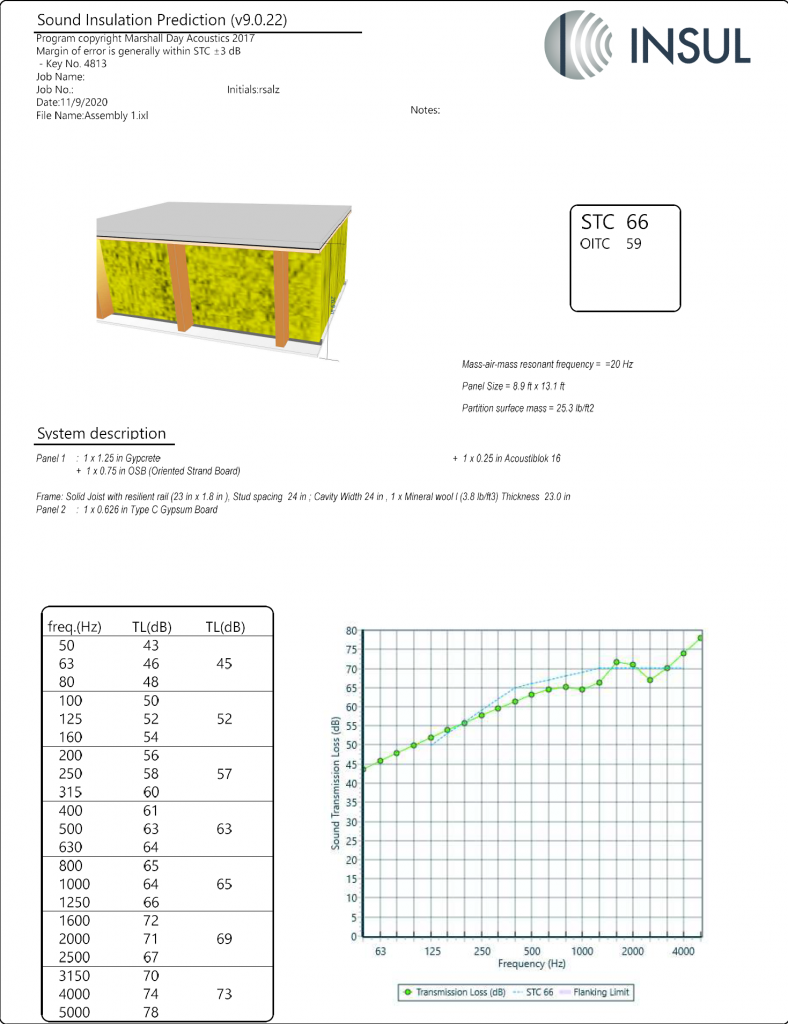
Acoustic modeling can help evaluate expected sound-isolation performance, compare construction alternatives and develop practical remediation strategies before field work begins.
On-Site Acoustic Testing provides modeling and technical evaluation of walls, floor/ceiling assemblies, windows and other building elements for projects involving airborne sound isolation, impact sound and acoustical security.
Modeling Building Assemblies
Modeling can be used to compare proposed assemblies, evaluate changes in materials or construction, and investigate existing assemblies that are not achieving the required acoustic performance. Depending on the project, the analysis may consider partitions, floors, ceilings, glazing and relevant transmission paths associated with building services.
Design, Troubleshooting and Remediation
For new construction, modeling can support acoustical plan review and comparison of design alternatives. For existing construction, it can help identify practical modifications to improve sound isolation and guide field investigation or remediation.
Modeling and Field Testing
Modeled performance and laboratory ratings should not be treated as substitutes for measurements of the completed building. Where verification is required, OSAT can perform building-acoustics field testing to document the performance of the installed construction.
Discuss Your Assembly or Remediation Problem
Contact On-Site Acoustic Testing with available drawings, assembly details, project criteria and any existing field or laboratory test data.
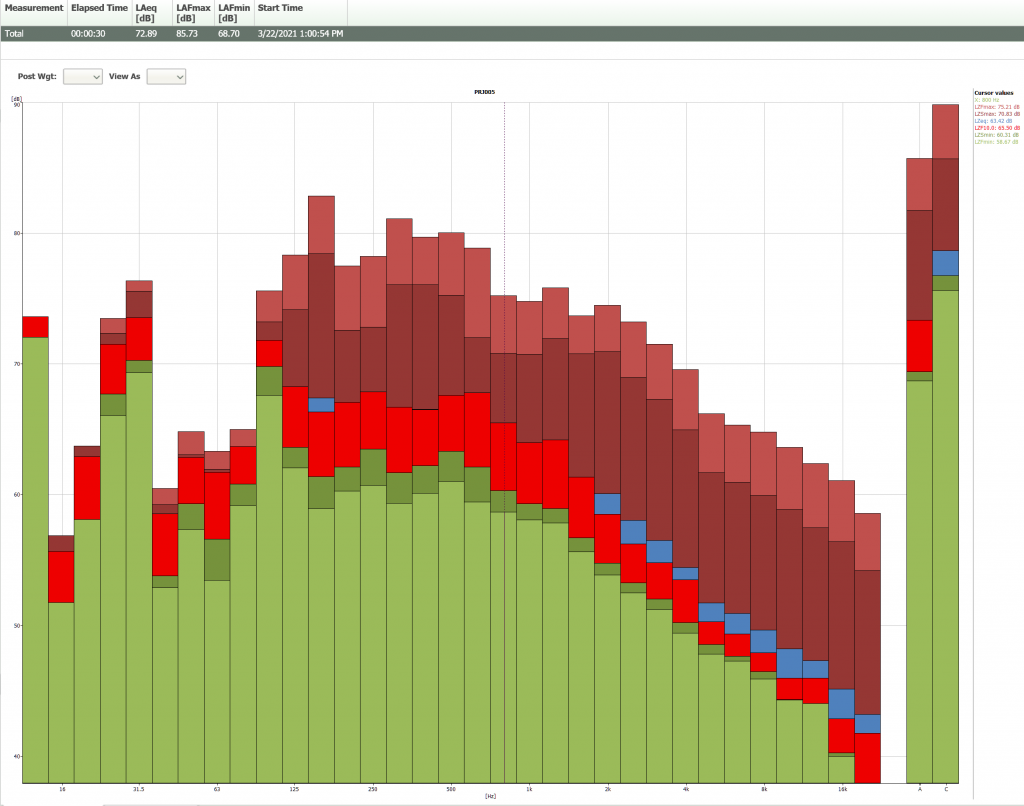
Frequency-spectrum analysis provides information that an overall sound-level measurement alone cannot show.
On-Site Acoustic Testing uses frequency analysis to characterize noise sources, identify dominant frequency components, investigate tonal or low-frequency problems, and support noise-control and troubleshooting work.
Octave-Band and One-Third-Octave Analysis
Sound can be analyzed by frequency band to show how acoustic energy is distributed across the spectrum. One-octave and one-third-octave measurements are widely used in building acoustics, environmental and industrial noise investigations, mechanical-system troubleshooting and evaluation of noise-control measures.
FFT and Narrowband Analysis
Where greater frequency resolution is useful, FFT or other narrowband analysis can help identify tones, harmonics and frequency components associated with particular machinery or processes. Comparing spectra under different operating conditions can also help distinguish competing sources.
Applications
Industrial and machinery noise investigations
HVAC and mechanical-system noise
Low-frequency and tonal noise complaints
Building and room acoustics
Source identification and troubleshooting
Pre- and post-mitigation comparisons
Specialized Source Measurements
Spectrum analysis can be combined with directional measurements and source-localization techniques when conventional sound-level measurements cannot adequately separate individual contributors. See our specialized noise testing and source localization services.
Discuss a Frequency-Analysis Project
Contact On-Site Acoustic Testing with the type of source, operating conditions and the noise or vibration problem being investigated so the appropriate measurement and analysis method can be selected.
Sound intensity measurements can quantify acoustic energy flow and help determine where machinery, equipment and building assemblies are radiating sound.
On-Site Acoustic Testing provides field sound-intensity measurements for equipment investigations, sound-power determination, source localization and diagnostic testing. Unlike sound-pressure measurements alone, sound intensity is directional and can be particularly useful when measurements must be made close to a source or where other sound sources are present.
Machinery and Equipment Sound Intensity
Sound-intensity measurements can be used to investigate chillers, pumps, motors, mechanical equipment and other complex sources. Measurements over a defined surface can show how acoustic energy varies by position and frequency, helping identify the portions of equipment that contribute most strongly to the radiated sound.
Sound Power Determination
Sound intensity can be used to determine sound power under applicable measurement procedures. This can support machinery-noise characterization, engineering studies, product documentation and projects requiring sound-power data rather than sound-pressure level alone.
Source Localization and Diagnostic Testing
Spatial sound-intensity measurements can help locate dominant radiating areas, acoustic leaks and transmission paths. The technique can be useful when troubleshooting equipment enclosures and building assemblies or evaluating changes before and after corrective work. For other localization methods, see our specialized noise testing and source localization services.
Sound Intensity Instrumentation
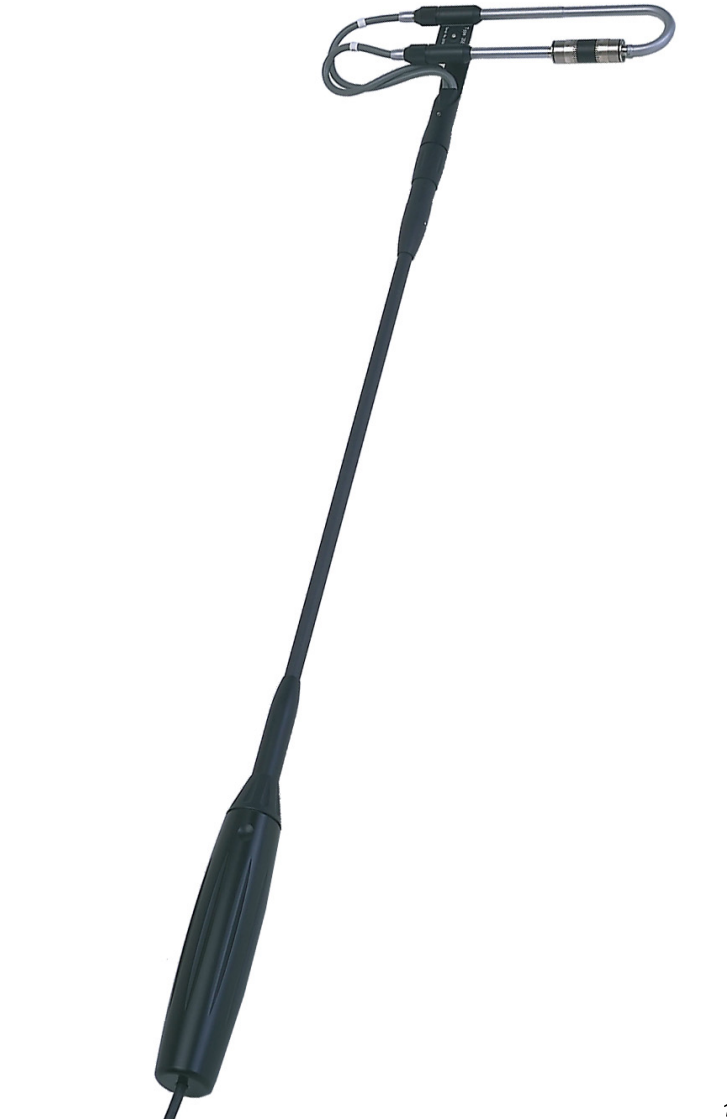
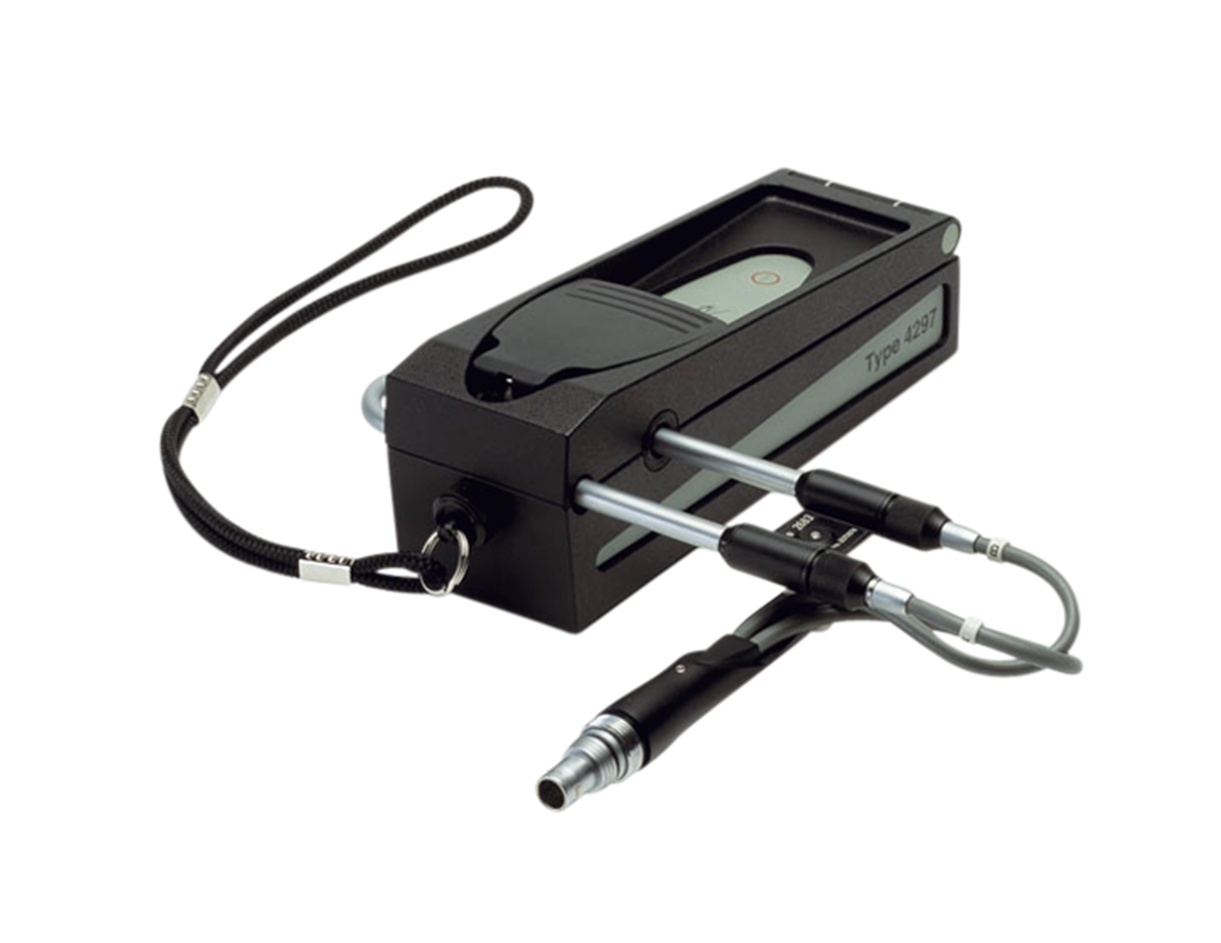
OSAT uses a Brüel & Kjær Type 3654 sound-intensity probe system with dedicated sound-intensity calibration equipment for field measurements.
B&K Type 3654 sound-intensity probe
B&K Type 4297 sound-intensity calibrator
Discuss a Sound Intensity Project
Contact On-Site Acoustic Testing with the equipment or assembly being investigated, operating conditions and measurement objective so the appropriate test approach can be developed.
Infrared thermography provides a non-contact view of surface-temperature patterns that can support building-envelope, mechanical, electrical, equipment, process, and diagnostic investigations.
On-Site Acoustic Testing uses FLIR thermal imaging as a field-investigation tool where temperature distribution, thermal anomalies, or changes under different operating conditions may help identify a problem or document performance.
FLIR Thermal Imaging and Surface-Temperature Mapping
Thermal images can show temperature patterns that are difficult to identify with conventional visual inspection alone. Depending on the project, OSAT can document surface-temperature differences, anomalous hot or cold areas, equipment operating patterns, and changes observed before and after corrective work.
Mechanical, HVAC, and Equipment Investigations
Thermography can be useful when investigating HVAC systems, air handlers, pumps, fans, motors, piping, rooftop equipment, generators, cooling equipment, and other accessible machinery or process surfaces. Thermal patterns can be compared between components or operating conditions to help identify areas that warrant additional investigation.
Building Envelope and Construction Investigations
Thermal imaging can identify temperature anomalies at walls, ceilings, windows, doors, penetrations, and other envelope or construction elements. These patterns may be associated with insulation discontinuities, air movement, thermal bridging, moisture-related conditions, or other construction differences, although interpretation depends on site conditions and should be correlated with other observations or measurements as appropriate.
Electrical and Accessible Equipment Surfaces
Infrared imaging can document unusual temperature patterns at accessible electrical panels, connections, and equipment surfaces without physical contact. OSAT uses thermography as a screening and documentation tool rather than as a substitute for electrical inspection, electrical safety evaluation, or trade-specific diagnostic work.
Data Center Thermal Investigations
For data centers and other mission-critical facilities, FLIR imaging can supplement noise and vibration work by documenting surface-temperature patterns at cooling equipment, air-handling systems, electrical and mechanical equipment, and other accessible infrastructure. Testing can include operating-condition comparisons, anomalous hot or cold areas, and before-and-after documentation associated with troubleshooting or corrective work.
Before-and-After and Comparative Testing
Where conditions can be reproduced, thermal images can be collected before and after repairs, adjustments, mitigation, or operating changes. Comparative imaging can provide a useful visual record of how surface-temperature patterns changed under the documented conditions.
Thermography as Part of a Broader Investigation
Infrared thermography does not directly measure sound leakage, vibration, electrical integrity, airflow, or moisture. It is most useful when thermal observations are interpreted alongside the appropriate field measurements and site information. For acoustic investigations, thermal imaging can provide supplementary information about construction discontinuities, while sound leakage itself should be confirmed using appropriate acoustic measurement or source-localization methods.
Independent Field Documentation
Reports can incorporate selected thermal images, visible-light photographs where useful, measurement conditions, observed temperature patterns, and technical interpretation appropriate to the scope of the investigation.
FLIR E8 Field Equipment
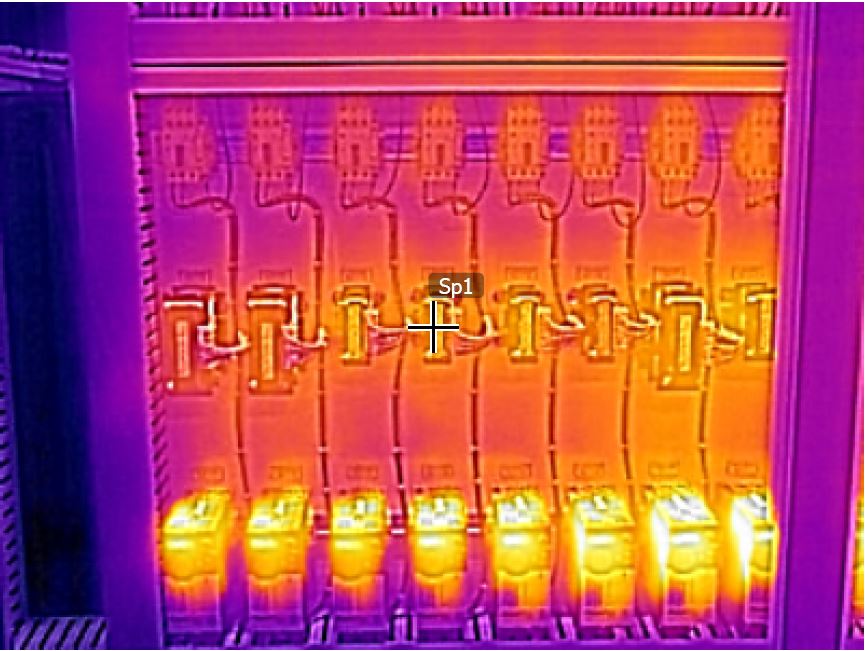
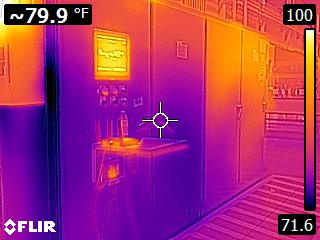
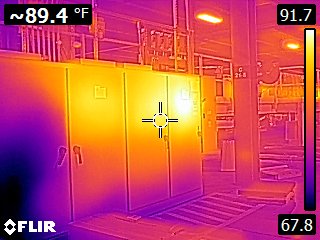
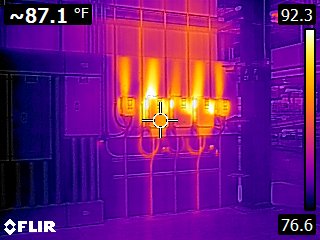
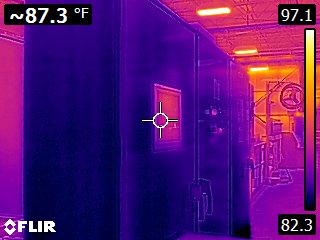
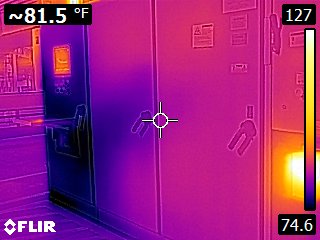
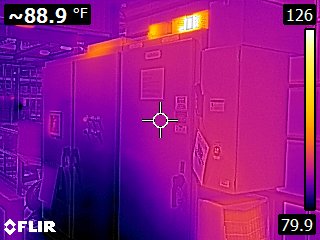
OSAT maintains FLIR E8 thermal imaging cameras for field investigations. These instruments help document relative temperature differences and conditions at the time of inspection. The following selected thermal images were captured using OSAT’s FLIR E8 equipment.
Selected FLIR Thermal Images
Examples from OSAT’s existing FLIR image archive. The colors show the selected display palette and relative thermal patterns; interpretation requires appropriate measurement settings and site context.
Measurement Conditions and Limitations
Thermal imaging measures emitted infrared radiation and estimates apparent surface temperature. Meaningful quantitative interpretation depends on emissivity, reflected apparent temperature, distance, viewing angle, environmental conditions, and instrument settings. A thermal anomaly is a diagnostic indication, not by itself proof of an electrical defect, moisture intrusion, or structural failure. Where a conclusion requires it, findings should be checked against additional observations, instruments, or specialist inspection.
For electrical work, inspections must be arranged with appropriate facility access, operating conditions, and qualified electrical personnel where required. OSAT’s thermography service is not a substitute for electrical safety assessment, code inspection, or a certified building energy audit unless expressly included in the agreed scope.
Integrated Investigations
Thermography can be combined with sound-level, sound-intensity, and vibration measurements when a facility has multiple interacting issues. For investigations involving mechanical source localization or other diagnostic methods, see Specialized Noise Testing and Source Localization. For cooling systems, equipment rooms, and facility operations, see Data Center Noise, Vibration & Thermal Testing.
What Clients Receive
Depending on the assignment, OSAT’s documentation may include representative thermal images, measurement locations, equipment and operating conditions, apparent temperature observations, image annotations, comparison of locations or operating states, and recommendations for further investigation where findings are inconclusive.
Discuss a Thermographic Investigation
Provide the building or equipment type, suspected condition, operating state, project location, and intended use of the results.
Field measurement of illuminance and lighting conditions for workplaces, commercial buildings, industrial facilities and other occupied spaces.
On-Site Acoustic Testing performs light-level surveys to document existing illumination, investigate complaints or deficiencies, compare lighting conditions across a facility, and verify project or client criteria. Measurements can be reported in lux or foot-candles as appropriate.
Illuminance and Light-Level Surveys
A lighting survey can document illumination at work surfaces, circulation areas, production spaces, offices, mechanical rooms, parking areas and other locations. Rather than applying a generic light-level table to every facility, OSAT can compare measured conditions with the criteria actually applicable to the space, task, project specification or governing requirement.
Professional Light Measurement Equipment
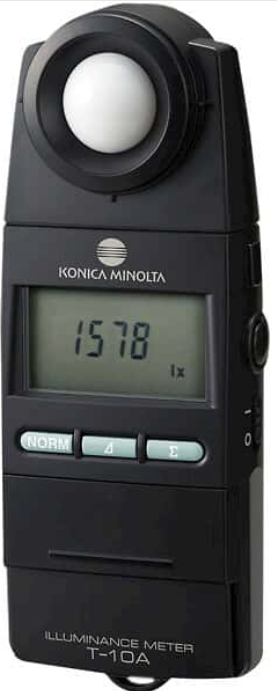
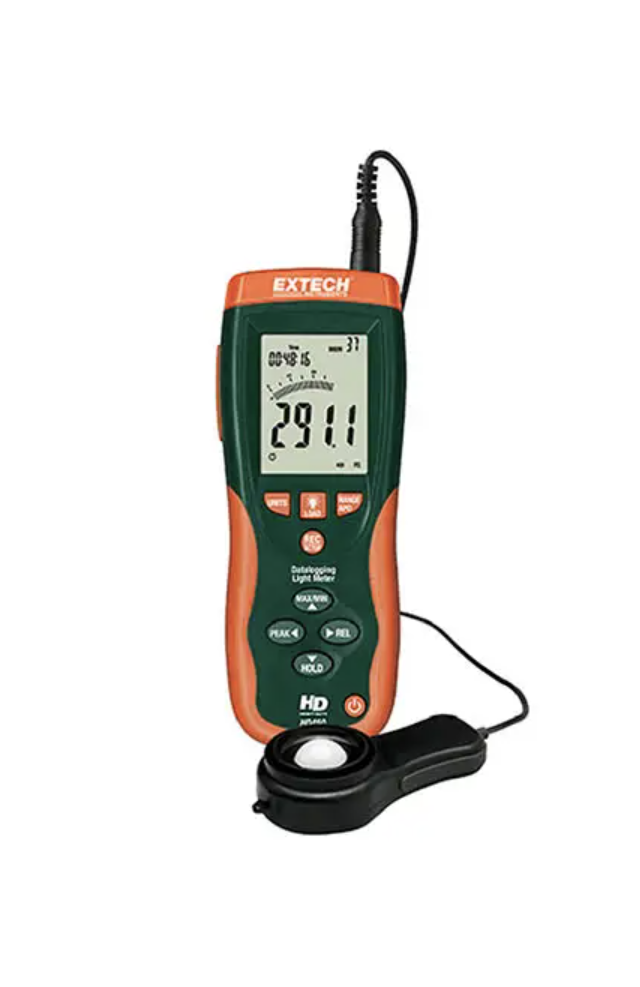
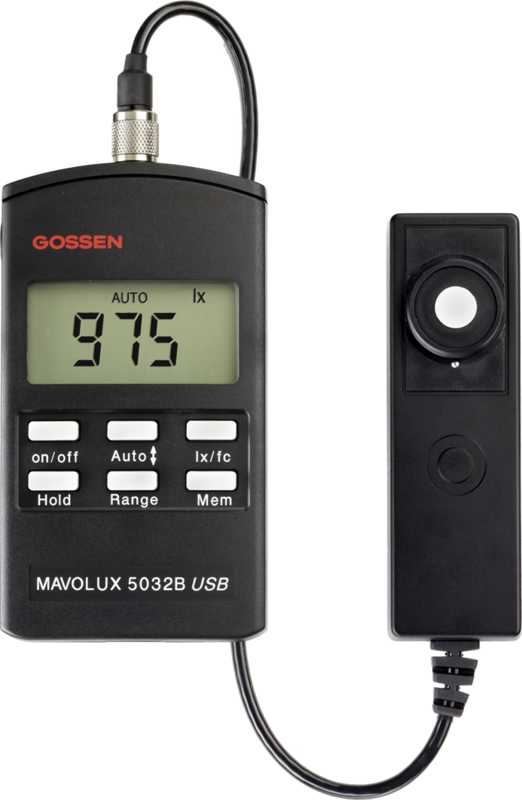
OSAT maintains several professional illuminance meters so the instrument can be selected for the measurement application. Current equipment includes the Konica Minolta T-10A, Extech HD450 and Gossen Mavolux.
Konica Minolta T-10A
Extech HD450
Gossen Mavolux
The Konica Minolta T-10A is a multi-function digital illuminance meter capable of measuring illuminance, illuminance difference and ratio, integrated illuminance and average illuminance. The Gossen Mavolux family provides precision illuminance measurements in lux or foot-candles with spectral response designed to correspond to the human eye’s photopic response.
Applications
Workplace and task-lighting surveys
Office, classroom and institutional lighting measurements
Industrial and manufacturing areas
Warehouses, mechanical rooms and support spaces
Parking, circulation and common areas
Pre- and post-upgrade lighting comparisons
Investigation of uneven or inadequate illumination
Measurement Against Project Criteria
Required or recommended illumination varies substantially with the task, occupancy and governing criteria. For that reason, reports can document measured values and compare them with the specific standard, specification, design criterion or client requirement identified for the project rather than relying on a single generalized table of recommended values.
Discuss a Lighting Survey
Contact On-Site Acoustic Testing with the facility type, areas to be evaluated and applicable lighting criteria, if known.
Independent testing is most useful when the party performing the measurements has no financial interest in selling the corrective product or installation.
Why Independence Matters
When a project involves disputed noise, vibration, sound isolation, or environmental conditions, the measurement plan and interpretation should be driven by the technical question rather than by a preferred product or remediation system.
Measurement Before Recommendation
OSAT focuses first on documenting the existing condition, identifying the relevant source or transmission path, and determining which measurements are appropriate. Recommendations can then be evaluated against measured data rather than assumptions.
Separation from Product Sales
OSAT does not sell acoustical products, flooring, vibration isolators, soundproofing materials, or installation services. This separation helps keep field testing, diagnosis, and verification independent from the sale of a proposed corrective solution.
Verification After Corrective Work
Where remediation is implemented by others, OSAT can perform follow-up testing to document whether the measured condition improved and whether applicable project criteria were achieved.
For projects requiring independent measurement and technical documentation, see our Why Choose OSAT page or contact us with the project scope.
Independent noise testing services and noise surveys help identify the sources, transmission paths, and operating conditions behind a noise problem before corrective measures are selected.
On-Site Acoustic Testing provides independent on-site noise level testing, environmental and community noise surveys, and noise-control consulting for commercial, industrial, institutional, and residential projects. Depending on the assignment, sound-level measurements, frequency analysis, source localization, vibration measurements, and building-acoustics testing establish the measured conditions needed to evaluate noise impacts and practical mitigation options.
Projects may begin with sound-level measurements and observations or require more detailed analysis of individual sources and transmission paths. Depending on the problem, OSAT can use frequency-spectrum analysis, specialized source localization, sound-intensity measurements, vibration measurements or building-acoustics testing to characterize the condition.
Mechanical and Equipment Noise
HVAC equipment, chillers, pumps, fans, generators, machinery and rooftop equipment can produce airborne noise, structure-borne vibration or both. Measurements can help distinguish the contributing mechanisms and provide a technical basis for evaluating practical control measures. For intermittent problems, long-term noise and vibration monitoring can document conditions over time.
Building Sound Isolation and Interior Acoustics
Noise-control work can also address sound transmission through walls, floors, ceilings, doors, windows and penetrations, as well as excessive reverberation or poor acoustic conditions within occupied spaces. Where appropriate, recommendations can be coordinated with field building-acoustics testing and acoustic modeling.
When to Request a Noise Survey
Independent noise testing is useful when a property owner, facility manager, architect, contractor or attorney needs defensible measurements rather than an estimate based on a phone application. Depending on the objective, a survey may document existing sound levels, distinguish steady equipment noise from intermittent events, compare operating conditions, or establish a baseline before mitigation. For projects requiring repeated observations, see our long-term noise and vibration monitoring service. For employee exposure and dosimetry, see our workplace noise testing information.
Typical Applications
HVAC and mechanical-equipment noise
Industrial machinery and process noise
Generators and energy facilities
Gyms and fitness facilities
Medical and professional offices
Restaurants, entertainment venues and auditoriums
Residential and mixed-use buildings
Recreational and community noise
From Measurement to Mitigation
OSAT can document existing conditions, identify dominant sources and transmission paths, evaluate proposed corrective measures and perform follow-up measurements after modifications. See our field testing case studies for examples of measurement-driven investigations. When a project requires architectural, structural or mechanical design beyond our scope, findings can be coordinated with the client’s design professionals or other project consultants.
Discuss a Noise-Control Problem
Contact On-Site Acoustic Testing with the source, affected space or property, operating conditions and objective of the investigation so an appropriate measurement and consulting approach can be developed.
Noise-control work is most effective when the dominant source, transmission path, operating condition, and receiving location are identified before corrective measures are selected.
On-Site Acoustic Testing provides independent field measurement, source identification, troubleshooting, and verification for environmental, industrial, mechanical, commercial, institutional, and residential noise problems. The objective is to establish what is actually producing the sound, how it reaches the affected location, and whether proposed or completed mitigation changes the measured condition.
Start with the Measured Condition
Before recommending mitigation, OSAT documents the existing condition under representative operating conditions. The measurement plan is developed around the actual complaint, specification, permit condition, acceptance criterion, or performance objective.
Depending on the project, the investigation may include broadband and frequency-resolved sound-level measurements, one-third-octave analysis, source localization, vibration measurements, sound-intensity measurements, long-term monitoring, building-acoustics testing, or before-and-after comparisons.
What We Evaluate
Dominant noise sources and operating states
Airborne, structure-borne, and flanking transmission paths
Frequency content, tonality, intermittency, and time variation
Indoor, outdoor, property-line, and receiver-location sound levels
Equipment vibration where structure-borne transmission is suspected
Compliance with project criteria, specifications, ordinances, permits, or other defined limits where applicable
Typical Applications
HVAC, chiller, pump, fan, cooling-tower, and generator noise
Industrial machinery, production equipment, and process noise
Data-center mechanical and electrical equipment
Sound transmission between occupied spaces
Fitness, recreation, pickleball, restaurant, hospitality, and entertainment noise
Residential, multifamily, HOA, and community noise complaints
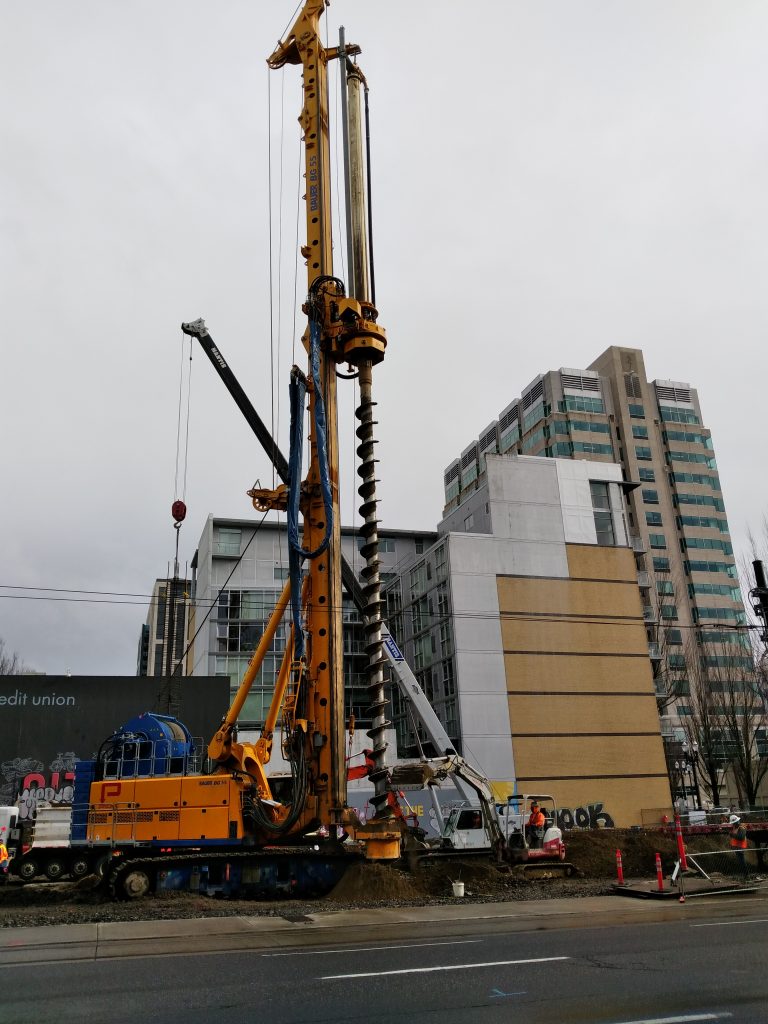
Construction and temporary equipment noise
Transportation, rail, aircraft, and other intermittent sources
Persistent low-frequency, tonal, or difficult-to-localize noise
Field Investigation and Source Localization
A single sound-level reading often does not explain a noise problem. Where troubleshooting is required, OSAT varies equipment operation, measurement position, and operating state to separate competing sources and identify the conditions that control the result. Measurements may be taken at the source, along the transmission path, and at the affected receiver so that mitigation can be directed at the dominant mechanism rather than at the most obvious equipment.
For conditions that vary over time, long-term noise and vibration monitoring can document operating cycles, nighttime events, intermittent sources, and complaint periods that may not occur during a short site visit.
Independent Mitigation Support
OSAT does not sell acoustical products or installation services. We can document the existing condition, identify likely sources and transmission paths, review proposed corrective approaches from a measurement perspective, and help determine which changes are most likely to affect the measured result.
After corrective work is completed, OSAT can return for verification testing using the same or comparable operating conditions and measurement locations. This provides an objective before-and-after record rather than relying on subjective impressions alone.
What Clients Receive
Deliverables are tailored to the assignment and can include measured sound and vibration data, frequency spectra, measurement locations and operating conditions, comparison with applicable criteria, field observations, source or transmission-path findings, photographs, and recommendations for additional investigation or corrective work. When required, the report can also document post-mitigation verification results.
For projects involving community, industrial, mechanical, building, or recurring nuisance noise, send the project location, the source or complaint being investigated, the operating schedule, and any applicable specification, ordinance, permit condition, or acceptance criterion.