Development and Architectural

Conflicts of Interest in Acoustic Consulting

Independent testing is most useful when the party performing the measurements has no financial interest in selling the corrective product or installation.

Why Independence Matters

When a project involves disputed noise, vibration, sound isolation, or environmental conditions, the measurement plan and interpretation should be driven by the technical question rather than by a preferred product or remediation system.

Measurement Before Recommendation

OSAT focuses first on documenting the existing condition, identifying the relevant source or transmission path, and determining which measurements are appropriate. Recommendations can then be evaluated against measured data rather than assumptions.

Separation from Product Sales

OSAT does not sell acoustical products, flooring, vibration isolators, soundproofing materials, or installation services. This separation helps keep field testing, diagnosis, and verification independent from the sale of a proposed corrective solution.

Verification After Corrective Work

Where remediation is implemented by others, OSAT can perform follow-up testing to document whether the measured condition improved and whether applicable project criteria were achieved.

For projects requiring independent measurement and technical documentation, see our Why Choose OSAT page or contact us with the project scope.

Conflicts of Interest in Acoustic Consulting Read More »

Noise Control and Sound Mitigation Consulting

Independent noise testing services and noise surveys help identify the sources, transmission paths, and operating conditions behind a noise problem before corrective measures are selected.

On-Site Acoustic Testing provides independent on-site noise level testing, environmental and community noise surveys, and noise-control consulting for commercial, industrial, institutional, and residential projects. Depending on the assignment, sound-level measurements, frequency analysis, source localization, vibration measurements, and building-acoustics testing establish the measured conditions needed to evaluate noise impacts and practical mitigation options.

Noise surveys are one part of OSAT’s broader independent acoustical testing services, which also include building sound isolation, secure-facility verification, and vibration measurements. For projects requiring measurements over multiple days or operating cycles, see long-term noise and vibration monitoring. For workplace exposure assessments, see workplace noise testing and dosimetry.

Environmental Noise Assessments and Compliance Testing

As independent noise assessment consultants, OSAT works with commercial and industrial facility owners, developers, municipalities, property managers and attorneys to document existing noise conditions and evaluate compliance with applicable project criteria or noise ordinances. Testing can include property-line sound levels, background and operating measurements, frequency analysis, and repeated or extended monitoring. When a dispute or construction deficiency requires independent technical evidence, see our acoustic investigation and litigation support services. For complex equipment and facility noise, see our data center noise testing and industrial noise testing services.

Noise Control Investigations

Projects may begin with sound-level measurements and observations or require more detailed analysis of individual sources and transmission paths. Depending on the problem, OSAT can use frequency-spectrum analysis, specialized source localization, sound-intensity measurements, vibration measurements or building-acoustics testing to characterize the condition.

Mechanical and Equipment Noise

HVAC equipment, chillers, pumps, fans, generators, machinery and rooftop equipment can produce airborne noise, structure-borne vibration or both. Measurements can help distinguish the contributing mechanisms and provide a technical basis for evaluating practical control measures. For intermittent problems, long-term noise and vibration monitoring can document conditions over time.

Building Sound Isolation and Interior Acoustics

Noise-control work can also address sound transmission through walls, floors, ceilings, doors, windows and penetrations, as well as excessive reverberation or poor acoustic conditions within occupied spaces. Where appropriate, recommendations can be coordinated with field building-acoustics testing and acoustic modeling.

When to Request a Noise Survey

Independent noise testing is useful when a property owner, facility manager, architect, contractor or attorney needs defensible measurements rather than an estimate based on a phone application. Depending on the objective, a survey may document existing sound levels, distinguish steady equipment noise from intermittent events, compare operating conditions, or establish a baseline before mitigation. For projects requiring repeated observations, see our long-term noise and vibration monitoring service. For employee exposure and dosimetry, see our workplace noise testing information.

Typical Applications

  • HVAC and mechanical-equipment noise
  • Industrial machinery and process noise
  • Generators and energy facilities
  • Gyms and fitness facilities
  • Medical and professional offices
  • Restaurants, entertainment venues and auditoriums
  • Residential and mixed-use buildings
  • Recreational and community noise

From Measurement to Mitigation

OSAT can document existing conditions, identify dominant sources and transmission paths, evaluate proposed corrective measures and perform follow-up measurements after modifications. See our field testing case studies for examples of measurement-driven investigations. When a project requires architectural, structural or mechanical design beyond our scope, findings can be coordinated with the client’s design professionals or other project consultants.

Discuss a Noise-Control Problem

Contact On-Site Acoustic Testing with the source, affected space or property, operating conditions and objective of the investigation so an appropriate measurement and consulting approach can be developed.

Please list the city, state/province, and country where testing will take place.
Select all that apply.
Optional. Examples: ASTM, ISO, ANSI, ICD-705, project specification, code requirement, or acceptance criterion.
If yes, only indicate that secure handling is required. Do not submit classified, CUI, export-controlled, or other sensitive information through this form.
List the project criteria and type of testing required, if known (noise survey, dosimetric, AIIC, ASTC, NIC, air quality, etc.)

Noise Control and Sound Mitigation Consulting Read More »

Noise and Sound Mitigation Consulting

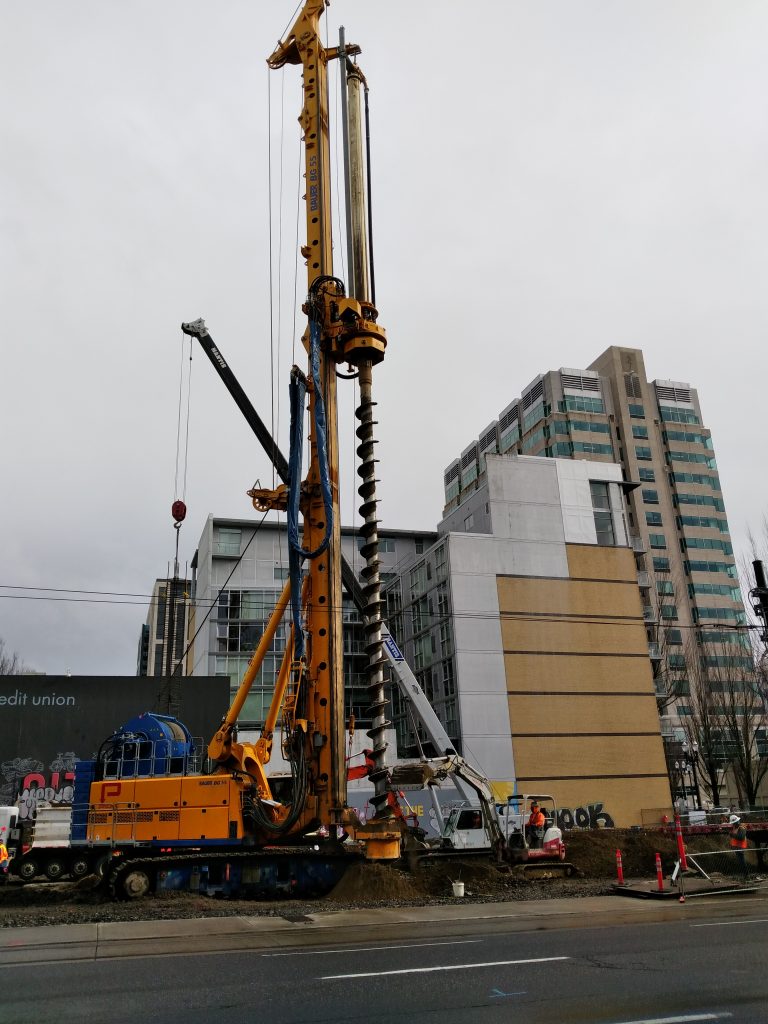
Field testing of drilling noise in an urban location.

Noise-control work is most effective when the dominant source, transmission path, operating condition, and receiving location are identified before corrective measures are selected.

On-Site Acoustic Testing provides independent field measurement, source identification, troubleshooting, and verification for environmental, industrial, mechanical, commercial, institutional, and residential noise problems. The objective is to establish what is actually producing the sound, how it reaches the affected location, and whether proposed or completed mitigation changes the measured condition.

Start with the Measured Condition

Before recommending mitigation, OSAT documents the existing condition under representative operating conditions. The measurement plan is developed around the actual complaint, specification, permit condition, acceptance criterion, or performance objective.

Depending on the project, the investigation may include broadband and frequency-resolved sound-level measurements, one-third-octave analysis, source localization, vibration measurements, sound-intensity measurements, long-term monitoring, building-acoustics testing, or before-and-after comparisons.

What We Evaluate

  • Dominant noise sources and operating states
  • Airborne, structure-borne, and flanking transmission paths
  • Frequency content, tonality, intermittency, and time variation
  • Indoor, outdoor, property-line, and receiver-location sound levels
  • Equipment vibration where structure-borne transmission is suspected
  • Compliance with project criteria, specifications, ordinances, permits, or other defined limits where applicable

Typical Applications

  • HVAC, chiller, pump, fan, cooling-tower, and generator noise
  • Industrial machinery, production equipment, and process noise
  • Data-center mechanical and electrical equipment
  • Sound transmission between occupied spaces
  • Fitness, recreation, pickleball, restaurant, hospitality, and entertainment noise
  • Residential, multifamily, HOA, and community noise complaints
  • Construction and temporary equipment noise
  • Transportation, rail, aircraft, and other intermittent sources
  • Persistent low-frequency, tonal, or difficult-to-localize noise

Field Investigation and Source Localization

A single sound-level reading often does not explain a noise problem. Where troubleshooting is required, OSAT varies equipment operation, measurement position, and operating state to separate competing sources and identify the conditions that control the result. Measurements may be taken at the source, along the transmission path, and at the affected receiver so that mitigation can be directed at the dominant mechanism rather than at the most obvious equipment.

For conditions that vary over time, long-term noise and vibration monitoring can document operating cycles, nighttime events, intermittent sources, and complaint periods that may not occur during a short site visit.

Independent Mitigation Support

OSAT does not sell acoustical products or installation services. We can document the existing condition, identify likely sources and transmission paths, review proposed corrective approaches from a measurement perspective, and help determine which changes are most likely to affect the measured result.

After corrective work is completed, OSAT can return for verification testing using the same or comparable operating conditions and measurement locations. This provides an objective before-and-after record rather than relying on subjective impressions alone.

What Clients Receive

Deliverables are tailored to the assignment and can include measured sound and vibration data, frequency spectra, measurement locations and operating conditions, comparison with applicable criteria, field observations, source or transmission-path findings, photographs, and recommendations for additional investigation or corrective work. When required, the report can also document post-mitigation verification results.

For projects involving community, industrial, mechanical, building, or recurring nuisance noise, send the project location, the source or complaint being investigated, the operating schedule, and any applicable specification, ordinance, permit condition, or acceptance criterion.


Please list the city, state/province, and country where testing will take place.
Select all that apply.
Optional. Examples: ASTM, ISO, ANSI, ICD-705, project specification, code requirement, or acceptance criterion.
If yes, only indicate that secure handling is required. Do not submit classified, CUI, export-controlled, or other sensitive information through this form.
List the project criteria and type of testing required, if known (noise survey, dosimetric, AIIC, ASTC, NIC, air quality, etc.)

Noise and Sound Mitigation Consulting Read More »

FSTC to ASTC: ASTM E336 Terminology

Older field sound-isolation reports may use the term FSTC, while current ASTM terminology uses ASTC — Apparent Sound Transmission Class.

The terminology change is important when reviewing legacy reports, specifications, and test records, but the underlying purpose remains field evaluation of the installed airborne sound-isolation performance of the separating construction.

Current Field Testing

OSAT performs airborne sound-isolation testing in accordance with the applicable current version of ASTM E336 and reports the field metric required by the project.

See ASTM E336 ASTC Airborne Sound Isolation Testing for the current service description.

FSTC to ASTC: ASTM E336 Terminology Read More »

FIIC to AIIC: ASTM E1007 Terminology

Older field impact-sound reports may use the term FIIC, while current ASTM terminology uses AIIC — Apparent Impact Insulation Class.

The terminology change is relevant when comparing legacy reports and specifications with current field testing. AIIC describes the impact-isolation performance of the installed floor/ceiling assembly and associated supporting structure under field conditions.

Current Field Testing

OSAT performs impact-sound testing in accordance with the applicable current version of ASTM E1007 and reports the field metric required by the project.

See ASTM E1007 AIIC Impact Sound Testing for the current service description.

FIIC to AIIC: ASTM E1007 Terminology Read More »